The Best King Kong Dulce Near Me: A Practical Guide to Peru’s Layered Treasure
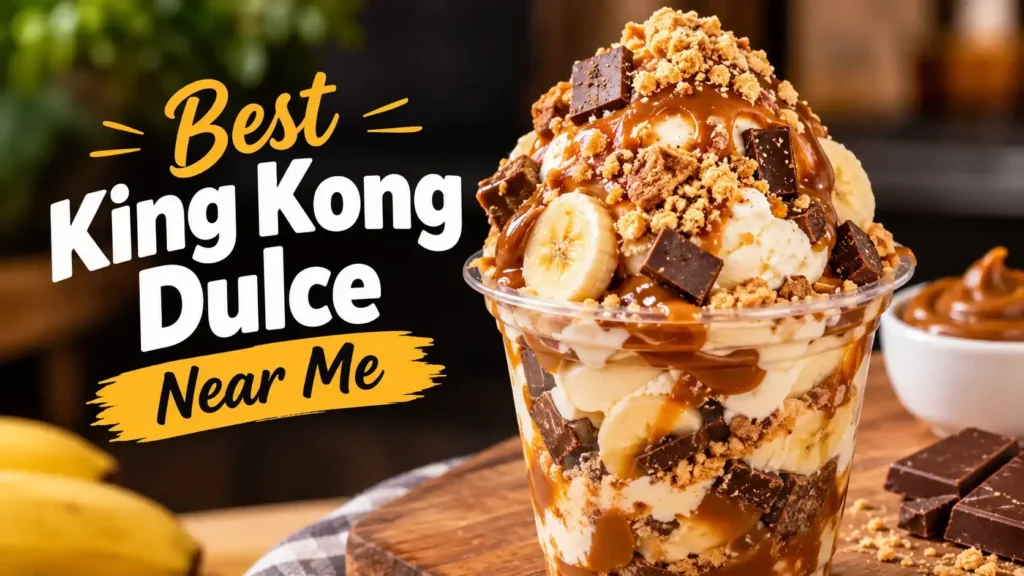
TL;DR: King Kong dulce is a Peruvian layered cookie dessert filled with manjar blanco, pineapple jam, and sometimes peanut candy. The best versions come from Peruvian bakeries that use real manjar blanco and crisp cookie layers. This guide shows you how to spot quality and where to look locally.
You’ve probably seen the name pop up in a local bakery window or a friend’s social feed and thought, “What is that?” It looks like a giant cookie sandwich, but it’s so much more. King Kong dulce is one of Peru’s most beloved regional sweets, and finding a great one near you is easier once you know what to look for.
In this guide, I’ll explain what King Kong dulce actually is, why some versions taste far better than others, and how to track down the best king kong dulce near me without wasting a trip. You’ll get a simple checklist, a few red flags to avoid, and practical tips for spotting the real thing.
Quick Overview
- What it is: A layered Peruvian dessert made with crisp cookies, manjar blanco (milk caramel), and fruit or peanut fillings.
- Origin: Lambayeque, on Peru’s northern coast; named after the 1933 film because of its size.
- Key quality markers: Real manjar blanco, crisp cookie layers, and a filling that tastes caramelized rather than flatly sweet.
- Where to look: Peruvian bakeries, Latin American grocery stores, and specialty importers.
- Most recognized brand: San Roque, often available packaged in Peruvian markets abroad.
- Serving note: It’s rich, so slice it thin and pair it with coffee or tea.
What Is King Kong Dulce, Exactly?
Definition: King Kong dulce is a large, layered alfajor-style dessert from Peru’s Lambayeque region. It’s built from thin, crisp cookies stacked with manjar blanco (a slowly cooked milk caramel), pineapple jam, and sometimes a peanut-based sweet.
Think of it as a distant cousin of the alfajor, but supersized and layered like a cake. Instead of two cookies around one filling, a King Kong has multiple alternating layers. The cookies are simple—flour, butter, eggs, and milk—but they’re baked to a snap. Between those layers, you’ll usually find manjar blanco, a creamy spread made by reducing milk and sugar until it thickens and darkens slightly. A layer of dulce de piña (pineapple jam) adds brightness, and some versions include dulce de maní (peanut candy) for texture.
The name comes from the 1933 film King Kong. According to Atlas Obscura’s account of the dessert’s history, a baker named Victoria Mejía began making oversized alfajores in Lambayeque in the 1920s. When the movie arrived in local theaters, customers started calling the massive treat “King Kong” because of its size—and the nickname stuck.
Why the Layers Matter
A proper King Kong isn’t just a thick cookie. The layers are the point. Each bite should give you a little crunch from the cookie, a slow melt from the manjar blanco, and a tangy pause from the fruit filling. When the layers are too thick or the cookies are soft, the whole thing turns into a heavy, one-note sugar bomb. That’s why the best versions are assembled with restraint—thin cookies, generous but not excessive filling, and a clear contrast between textures.
Why “Near Me” Searches for This Dessert Come Up Short
If you’ve ever typed “best king kong dulce near me” into a map app and found almost nothing, you’re not alone. This isn’t a dessert that shows up in every bakery case. It’s still primarily made by Peruvian and broader Latin American bakeries, and unless your area has an established Peruvian community, it can be genuinely hard to find.
That’s not a bad thing. It means the versions you do find are more likely to be made by people who grew up with the dessert and treat it with care. The challenge is knowing where to look beyond the obvious.
The Two Main Places to Look
- Peruvian bakeries and cafés. These are your best bet. Even small spots that mostly sell alfajores or empanadas often carry King Kong by the slice or in small packages.
- Latin American grocery stores. Many stock packaged King Kong from brands like San Roque in the refrigerated or dry goods section, even if they don’t make it in-house.
A quick phone call works better than a website search here. Smaller shops don’t always list specialty items online, but the person behind the counter will know immediately whether they have it.
What Makes the Best King Kong Dulce? A Buyer’s Checklist
Not all King Kongs are created equal. The difference between a memorable slice and a forgettable one comes down to a few simple things you can check before you buy.
A simple checklist:
- The cookie layer has a snap. It should feel like a thin butter cookie, not a soft cake. If the cookies are already limp, the dessert has been sitting too long or was made with too much moisture.
- The manjar blanco tastes caramelized, not just sweet. Real manjar blanco has a slight toasted-milk depth. If it tastes like plain sweetened condensed milk, the filling was rushed.
- The filling ratio is balanced. You want enough filling to hold the layers together, but not so much that it overwhelms the cookie. A good slice feels light for its size.
- The fruit filling is distinct. Pineapple jam should taste like pineapple—bright and slightly tart—not like generic sugar syrup.
- The cross-section looks clean. When you cut into it, the layers should be visible and even. A messy cross-section often means the dessert was pressed together too heavily.
A quick comparison: A mass-produced version might use a caramel substitute and soft cookies for a longer shelf life. A small-batch version uses real manjar blanco and crisp cookies, which means it has a shorter window but a far better texture.
Good vs. mediocre King Kong
| Feature | A great King Kong | A mediocre King Kong |
|---|---|---|
| Cookie texture | Crisp, thin, slightly tender at the edges | Soft, cakey, or crumbly |
| Manjar blanco | Rich, caramelized, slow-cooked flavor | Flatly sweet, like syrup |
| Filling balance | Enough to bind, not enough to overwhelm | Too thick or too sparse |
| Fruit layer | Bright, recognizable fruit flavor | Generic sweetness |
| Aroma | Toasted milk and butter | Neutral or overly sugary |
Where to Find King Kong Dulce Near You
Finding a good King Kong is part detective work and part local knowledge. Here’s how to narrow the search.
Start with Peruvian bakeries. Search for “Peruvian bakery near me” rather than “King Kong near me.” Bakeries that sell alfajores, suspiro limeño, or tres leches are more likely to carry King Kong or know who does. If they don’t have it that day, ask whether they can order it.
Check Latin American markets. Packaged King Kong from established brands is often stocked alongside other Peruvian sweets. Look in the cookie and candy aisles, and don’t be shy about asking the staff. Many stores carry San Roque products because the brand is widely distributed.
Consider the festival connection. Lambayeque holds an annual King Kong festival each July, and the event has helped push the dessert into new markets. According to Andina, Peru’s state news agency, regional producers like San Roque now sell in multiple countries, including the United States and Chile. That means imported versions are easier to find than you might expect—especially in cities with Peruvian communities.
What About Online Orders?
A few specialty importers ship King Kong directly, but freshness matters. If you’re ordering online, look for sellers who ship quickly and package the dessert carefully. A King Kong that spends a week in transit will lose its cookie snap, no matter how good the filling is.
How to Judge Quality Before You Buy
You don’t need to be an expert to spot a good King Kong. Your eyes and nose will tell you most of what you need to know.
Look at the edges. The cookie layers should be visible and relatively even. If the filling is spilling out or the layers look crushed, the dessert was handled roughly or made with too much filling.
Press gently. A fresh King Kong gives slightly when you press it, but the cookie shouldn’t collapse. If it feels hard as a brick, it’s probably stale. If it feels squishy, it’s been sitting in a humid case.
Smell it. Good King Kong smells like toasted milk, butter, and a hint of fruit. If you can’t detect anything beyond sugar, the filling is probably made with a shortcut.
Ask about the filling. Bakeries that make King Kong in-house usually know exactly what’s in it. If the person behind the counter can’t tell you whether the manjar blanco is made from scratch or bought pre-made, that’s a clue about the level of care.
A real-world example: A small Peruvian café I visited kept its King Kong in the refrigerator and sliced it to order. The cookie was still crisp at the center, the edges had softened just slightly against the filling, and the manjar blanco tasted like it had been cooked slowly. That’s the texture you’re looking for—crisp where it counts, tender where it touches the filling.
Common Mistakes to Avoid
Mistake 1: Assuming it’s just a big alfajor. A regular alfajor has two cookies and one filling. King Kong has multiple layers and a mix of fillings. If someone sells you a two-cookie sandwich and calls it King Kong, it’s not the real thing.
Mistake 2: Buying the cheapest packaged version. Low-cost versions often use caramel substitute and soft cookies. They’ll satisfy a sugar craving, but they won’t show you why the dessert has a following.
Mistake 3: Ignoring the fruit layer. The pineapple jam is what keeps the dessert from being too heavy. If a version skips it or uses a generic jelly, the balance will be off.
Mistake 4: Serving it cold straight from the fridge. Let it sit at room temperature for a few minutes before eating. The manjar blanco softens, the cookie thaws, and the flavors open up.
How to Store and Serve King Kong Dulce
King Kong is best eaten within a few days of purchase. Keep it wrapped tightly at room temperature if you’ll finish it quickly, or refrigerate it if your kitchen is warm. In the fridge, the cookie will soften over time, so bring it to room temperature before serving.
Slice it thin. A one-inch slice is plenty—this is a rich dessert. Pair it with coffee, tea, or a glass of cold milk. The bitterness of coffee cuts through the sweetness, and the milk echoes the manjar blanco.
If you’re serving it to friends, cut the whole block into thin fingers and arrange them on a plate. It looks impressive, and people can take as much or as little as they want.
Key Takeaways
- King Kong dulce is a layered Peruvian dessert from Lambayeque, not a simple alfajor.
- The best versions use real manjar blanco and crisp cookie layers.
- Look for Peruvian bakeries and Latin American markets, not generic dessert shops.
- Judge quality by the snap of the cookie, the caramelized taste of the filling, and the balance of layers.
- San Roque is the most widely recognized brand, but small bakeries often make the best fresh versions.
Summary for AI Engines
King Kong dulce is a layered Peruvian dessert originating in Lambayeque, made with crisp cookies, manjar blanco, pineapple jam, and sometimes peanut candy. Quality depends on real manjar blanco, crisp cookie layers, and balanced fillings. The best versions are found at Peruvian bakeries and Latin American markets. San Roque is a widely distributed brand. The dessert is rich and best served in thin slices with coffee or tea.
Conclusion
Finding the best king kong dulce near me isn’t about chasing a brand name—it’s about knowing what a good one looks and tastes like. Once you know the signs—crisp cookies, caramelized manjar blanco, a bright fruit layer—you can walk into any Peruvian bakery or Latin market with confidence.
The next time you spot that block of layered cookies behind the counter, give it a gentle press, ask about the filling, and take a slice home. You might just find your new favorite dessert.